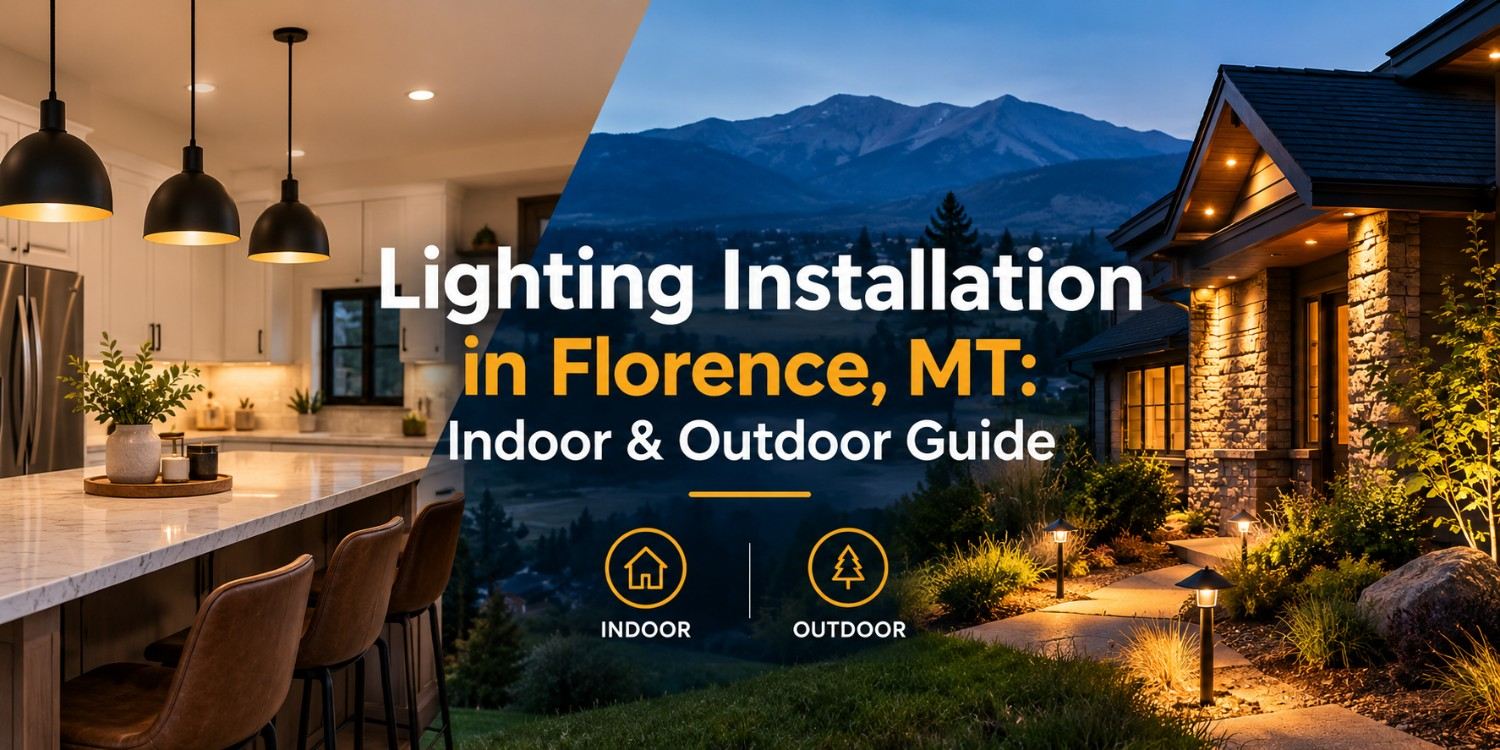
Good lighting does more than help you see, it changes how a home feels, how safe a property is after dark, and how much you spend on energy every month. Whether you’re upgrading a dim kitchen, adding recessed cans to a remodeled living room, or lighting up a long gravel driveway on the edge of the Bitterroot Valley, professional lighting installation in Florence, MT makes the difference between a fixture that just “works” and a lighting plan that actually works for your home.
This guide walks through everything homeowners in Florence and the surrounding Bitterroot Valley need to know about indoor and outdoor lighting installation, the most popular fixture types, what drives cost, warning signs that your current wiring can’t keep up, and how to choose an electrician who will do the job safely and up to code.
Why Professional Lighting Installation Matters in Florence, MT
Florence sits in a mix of older farmhouses, newer subdivisions, and rural properties on acreage, which means the electrical systems behind the walls vary a lot from house to house. A fixture swap that looks simple on a home-improvement video can turn into a bigger job once an outdated panel, aluminum wiring, or an ungrounded circuit is involved. A licensed electrician checks the circuit, confirms it can safely handle the added load, and installs the fixture so it’s protected against moisture, weather, and the wide temperature swings Western Montana sees between winter and summer.
Hiring a professional for lighting installation in Florence, MT also protects your home’s resale value and insurance standing. Improperly installed outdoor fixtures and DIY recessed lighting are common findings on home inspection reports, and insurers can flag non-code wiring as a liability. A properly permitted, professionally installed lighting system avoids all of that.
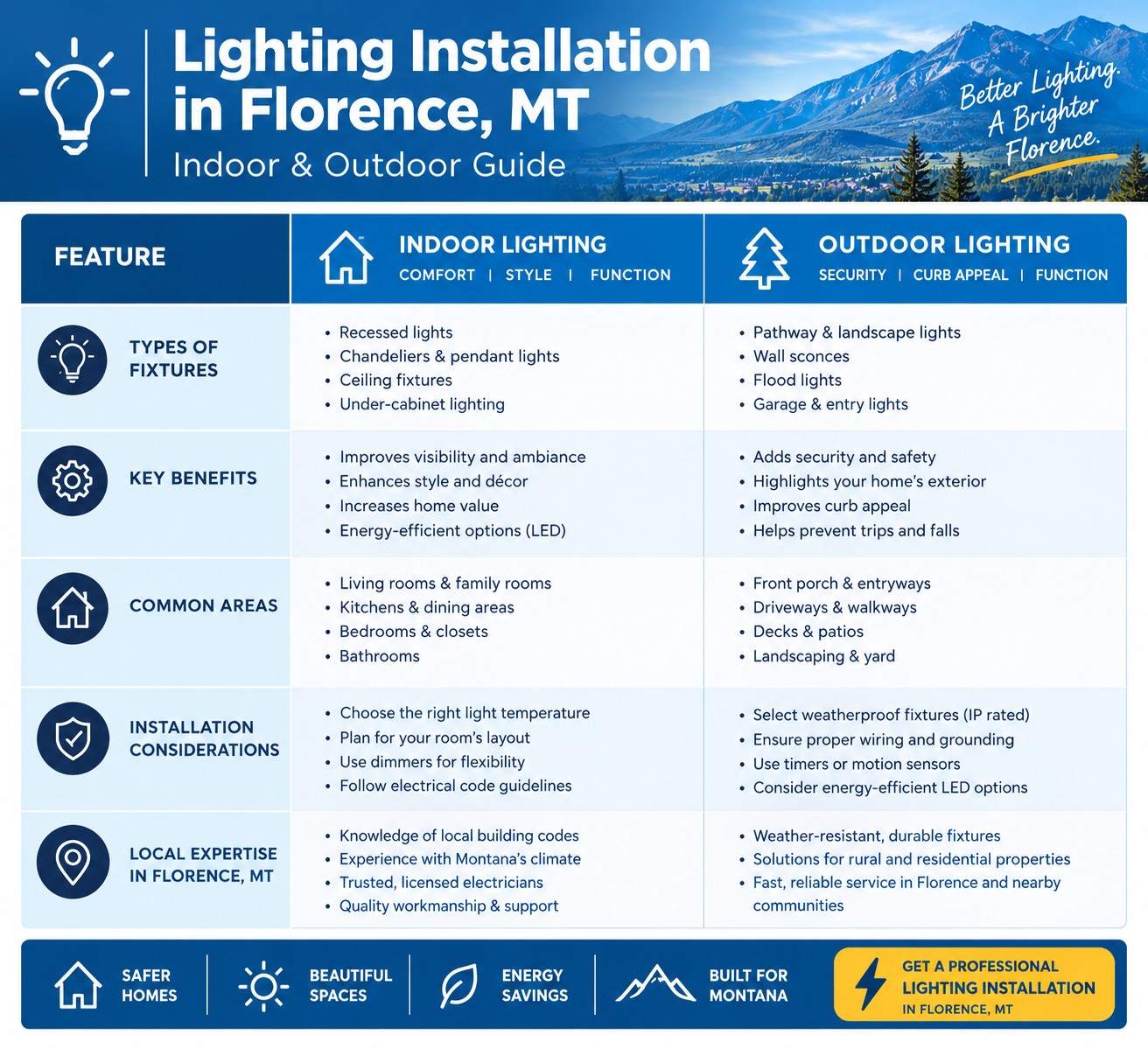
Indoor Lighting Installation Services in Florence, MT
Indoor lighting installation covers everything from a single pendant over a kitchen island to a whole-home recessed lighting plan. Below are the most requested indoor lighting projects for Florence homes.
Recessed & Can Lighting
Recessed lighting is the most requested upgrade in living rooms, kitchens, hallways, and basements because it delivers clean, even light without taking up visual space. Installation involves cutting precise ceiling openings, running new cable where needed, and wiring each can to a switch or dimmer, work that requires careful attention to insulation contact (IC) ratings, especially in Montana attics where insulation depth affects fixture choice and fire safety
Kitchen and Under-Cabinet Lighting Installation
Kitchens benefit the most from a layered lighting plan: recessed ceiling lights for general illumination, pendant lights over an island or bar, and under-cabinet LED strips for task lighting on countertops. Under-cabinet lighting installation usually requires a dedicated low-voltage transformer and careful concealment of wiring behind cabinetry, details that are easy to get wrong without electrical experience.
Ceiling Fans & Fixture Upgrades
Swapping a dated ceiling fixture for a modern chandelier, flush mount, or ceiling fan with light kit often means the existing electrical box isn’t rated to support the new weight. Our team upgrades the box to a fan-rated brace when needed, so the fixture is secure and won’t wobble, sag, or pull loose over time.
Smart Lighting & Dimmer Switches
Smart switches, dimmers, and app-controlled lighting are increasingly popular in Florence homes, especially for bedrooms, home offices, and media rooms. Proper installation matches the dimmer type to the bulb (LED-compatible dimmers, not legacy incandescent dimmers) to prevent flickering, humming, or premature bulb failure.
Outdoor Lighting Installation in Florence, MT
Outdoor lighting installation is especially important in a rural, tree-covered area like the Bitterroot Valley, where properties often sit far from streetlights and driveways can stretch a hundred yards or more from the road. Well-planned outdoor lighting improves safety on stairs and walkways, deters trespassing, and extends how long you can enjoy a deck or patio into the evening.
Landscape & Pathway Lighting
Low-voltage landscape lighting highlights walkways, trees, garden beds, and architectural features while keeping energy use low. Installation includes trenching cable below grade, connecting fixtures to a transformer, and setting a timer or photocell so the lights turn on automatically at dusk, ideal for the long summer evenings and early winter sunsets Florence sees throughout the year.
Security & Motion-Sensor Lighting
Motion-activated floodlights around entry doors, garages, and driveways are one of the most requested outdoor upgrades for rural Montana properties, where wildlife and long dark stretches make visibility a real safety concern. Correct installation includes setting the motion sensor’s range and sensitivity so it doesn’t false-trigger on passing deer or blowing branches, a common frustration with DIY installs.
Deck, Patio & Porch Lighting
Post-cap lights, step lights, and string-light circuits turn a deck or patio into usable space after sunset. Because these fixtures are exposed to rain, snow, and freeze-thaw cycles, they need weather-rated (wet-location) fixtures and properly sealed connections, something that matters a great deal given Montana’s winters.
Barn, Shop & Outbuilding Lighting
Many Florence properties include a detached garage, barn, shop, or outbuilding that needs its own lighting circuit. This often involves running a new underground feeder from the main panel installing a sub-panel, and wiring high-bay or vapor-tight fixtures suited to a workshop or barn environment.
Energy Efficiency: Why LED Matters for Lighting Installation
Nearly every lighting installation in Florence, MT today is built around LED fixtures, and for good reason. LED bulbs use a fraction of the electricity that incandescent and even older CFL bulbs require, which matters in a region where winter heating and lighting bills both climb during the coldest months. Beyond the lower utility bill, LED fixtures run cooler, last significantly longer, often 15 to 25 years of typical use, and hold up better to the vibration and temperature swings common in outdoor Montana installations.
When we install recessed cans, under-cabinet strips, or outdoor floodlights, we also match the color temperature to the space: warmer 2700K–3000K light for living rooms, bedrooms, and porches where a cozy feel matters, and cooler 4000K–5000K light for kitchens, garages, workshops, and security fixtures where visibility and task performance come first. Getting the color temperature right is a small detail that makes a noticeable difference in how a finished space actually feels once the lights are on.
Lighting Design Tips by Room
A successful lighting installation is as much about planning as it is about wiring. Before any fixtures go in, it helps to think through how each space is actually used.
- Living rooms: layer recessed lighting with a floor or table lamp and a dimmer so the room can shift from bright and functional to relaxed in the evening
- Kitchens: combine overhead recessed lighting, task lighting under cabinets, and a statement pendant or two over the island
- Bedrooms: keep overhead lighting on a dimmer and add bedside sconces or lamps on a separate switch
- Bathrooms: install vanity lighting at eye level on both sides of the mirror to avoid harsh shadows, and confirm all fixtures are rated for damp or wet locations
- Home offices: prioritize even, glare-free lighting near the desk to reduce eye strain during video calls and screen work
- Garages and shops: use high-output LED fixtures on separate switching so work areas can be lit independently of storage areas
Signs You Need a Lighting Upgrade
- Rooms that feel dim even with every light on, or bulbs that burn out unusually fast
- Flickering lights when other appliances turn on, which can point to a circuit or panel issue
- Outdoor fixtures that are rusted, cracked, or no longer sealed against moisture
- A dark driveway, walkway, or entry door with no motion-sensor or dusk-to-dawn lighting
- Switches or dimmers that hum, buzz, or feel warm to the touch
- A recent remodel, addition, or basement finish that still relies on a single overhead bulb
Common Lighting Installation Mistakes We See in Florence Homes
A large share of our lighting calls in Florence start as a repair to a DIY project gone wrong. The most frequent issues include recessed lights installed without the correct insulation-contact (IC) rating, which creates a fire risk when attic insulation touches the fixture housing; outdoor fixtures rated only for dry locations installed in exposed, weather-facing spots; light switches wired to the wrong circuit, causing rooms to lose power unpredictably; and ceiling fixtures mounted to standard electrical boxes that aren’t rated to hold the fixture’s weight over time. Every one of these is preventable with a proper load assessment and code-compliant installation from the start.
Why Hire a Licensed Electrician for Lighting Installation
Lighting installation involves more than mounting a fixture, it means working inside live electrical panels, sizing circuits correctly, and following the National Electrical Code (NEC) along with Montana’s local permitting requirements. A licensed electrician verifies that a circuit isn’t already overloaded before adding new fixtures, grounds and bonds everything correctly, and uses weather-rated components outdoors so the installation holds up through a Montana winter rather than failing after the first hard freeze.
For homeowners weighing a full rewire against a simple fixture swap, our electrical service and troubleshooting page breaks down how we evaluate a home’s existing wiring before any lighting work begins.
| Home Size / Load Need | Recommended Generator Size | Typical Coverage |
|---|---|---|
| Small home / essential circuits only | 10–14 kW | Well pump, furnace, fridge, select lighting & outlets |
| Mid-size home (1,800–3,000 sq ft) | 16–20 kW | Most of the home, including HVAC and kitchen |
| Large home or home w/ well + electric heat | 22–26 kW | Whole-home coverage, including AC and large appliances |
| Rural property / hobby farm | 24 kW+ | Home plus shop, barn, or outbuilding circuits |
| Small commercial / office | 30 kW+ | Sized per commercial load calculation |
Our Lighting Installation Process
- Free on-site consultation to walk through your indoor and outdoor lighting goals
- Electrical load assessment to confirm existing circuits can safely support new fixtures
- Fixture and placement recommendations based on room use, ceiling height, and outdoor exposure
- Licensed, permitted installation following NEC and local code requirements
- Final walkthrough and testing of every switch, dimmer, and sensor before we leave
Lighting Installation Cost in Florence, MT
Lighting installation cost depends on the fixture type, whether new wiring is required, and how accessible the ceiling, attic, or outdoor trenching area is. A single recessed light on an existing circuit costs far less than a full outdoor landscape lighting system that requires trenching and a new transformer. During your free consultation, we provide a clear, itemized estimate before any work begins, so there are no surprises once the job is scheduled.
A few factors that typically move the price up or down include the number of fixtures being installed at once, whether a dedicated circuit or sub-panel is needed, how far cable has to run between the panel and the fixture, and whether the project involves finished ceilings and walls that need to be opened and patched versus open framing on new construction. Bundling several fixtures into one visit, for example, upgrading recessed lighting throughout a main floor at the same time, is almost always more cost-effective than scheduling separate trips for each room.
Choosing the Right Electrician for Lighting Installation
Not every contractor who installs lighting is a licensed electrician, and that distinction matters once wiring, panels, and permits are involved. When comparing electricians for a lighting installation project in Florence, MT, look for a current Montana electrical license, proof of insurance, a willingness to pull permits when the work requires it, and a written estimate that spells out materials and labor before work starts. A reputable electrician will also be upfront about what a project does and doesn’t need, recommending a simple fixture swap when that’s all the job calls for, rather than upselling unnecessary work.
Serving Florence and the Bitterroot Valley
We install indoor and outdoor lighting throughout Florence, MT and the surrounding Bitterroot Valley, including Missoula, Lolo, Stevensville, and Hamilton. Whether it’s a single-room fixture upgrade or a full landscape and security lighting package for a rural property, our licensed electricians handle the wiring, permitting, and installation from start to finish.
If it’s been a while since your home’s wiring was checked, pair your lighting upgrade with our home electrical inspection checklist to make sure the rest of your system is ready to support it.
Need a fixture fixed after hours? See what our emergency electrician in Missoula guide covers so you know what qualifies as urgent.
Ready to get started? Schedule your free lighting consultation and we’ll walk you through indoor and outdoor options for your home.
Frequently Asked Questions
Do I need a permit for lighting installation in Florence, MT?
In most cases, yes, new circuits, outdoor wiring, and panel upgrades typically require a permit and inspection. Simple like-for-like fixture swaps on existing circuits often don’t. We handle all required permitting as part of the installation.
How much does outdoor lighting installation cost?
Cost depends on the number of fixtures, how far cable needs to run, and whether trenching is required. A small pathway lighting set costs far less than a full-property security and landscape lighting system. We provide a written estimate after an on-site walkthrough.
Can you install lighting in an older Florence farmhouse with outdated wiring?
Yes. We regularly work in older homes with aluminum wiring, undersized panels, or ungrounded circuits. We assess the existing system first and recommend any upgrades needed to safely support new lighting.
What’s the difference between recessed lighting and can lighting?
The terms are often used interchangeably. “Can lighting” traditionally refers to the metal housing (the “can”) set into the ceiling, while “recessed lighting” describes the overall flush-mounted look. Both are installed the same way.
Will motion-sensor lights work well with wildlife in the area?
Yes, when the sensor’s range and sensitivity are set correctly. We adjust each motion sensor during installation to reduce false triggers from deer, pets, or blowing branches while still catching real activity near your home.
How long does a typical lighting installation take?
A few interior fixtures can often be completed in a single visit. Larger projects, like a full outdoor landscape lighting system or a new sub-panel for a barn or shop, may take one to three days depending on scope.
Can existing wiring support new recessed or landscape lighting?
Sometimes, but not always. Older Florence homes and properties with aluminum wiring or an undersized panel may need an upgrade before new circuits can be safely added. We check this during the free consultation so there are no surprises once work begins.
Do you install lighting on new construction as well as existing homes?
Yes. We work on both new-build lighting installation, including full rough-in wiring before drywall, and retrofit projects in existing homes and outbuildings throughout Florence and the Bitterroot Valley.
Leave a Reply